
KRd (CRD)
Say it: K R D
Carfilzomib, lenalidomide and dexamethasone
KRd is a three medicine combination for multiple myeloma: an IV medicine (carfilzomib), daily pills (lenalidomide) and a steroid (dexamethasone).
Also called: CRD, KRD, carfilzomib lenalidomide dexamethasone, Kyprolis Revlimid dexamethasone, D-KRd, Dara-KRd
What it is
Each medicine attacks myeloma cells in a different way, so together they work better than any one alone. Carfilzomib blocks the cell's protein recycling system. Lenalidomide helps the immune system and slows myeloma growth. Dexamethasone kills myeloma cells directly. The goal is deep, long lasting control of the myeloma.
| K | Kyprolis (carfilzomib) |
|---|---|
| R | Revlimid (lenalidomide) |
| d | dexamethasone |
Often used for
- newly diagnosed multiple myeloma, often before a stem cell transplant
- multiple myeloma that has come back
- Once weekly vs twice weekly carfilzomib
- Carfilzomib can be given on 2 days in a row each week (days 1, 2, 8, 9, 15 and 16) or once a week. Weekly dosing means fewer clinic visits.
- Dara-KRd (D-KRd)
- Daratumumab may be added to make a four medicine plan, often for newly diagnosed myeloma before transplant.
- Before and after transplant
- KRd may be given for several cycles, then a stem cell transplant, then more KRd and lenalidomide maintenance.
The medicines in this plan
- Carfilzomib
- Proteasome inhibitor given through a vein over about 10 to 30 minutes, once or twice a week for 3 weeks of each 4 week cycle.
- Lenalidomide
- Capsules taken by mouth once a day on days 1 to 21 of each 28 day cycle.
- Dexamethasone
- Steroid taken by mouth or through a vein, usually once a week.
How you get it
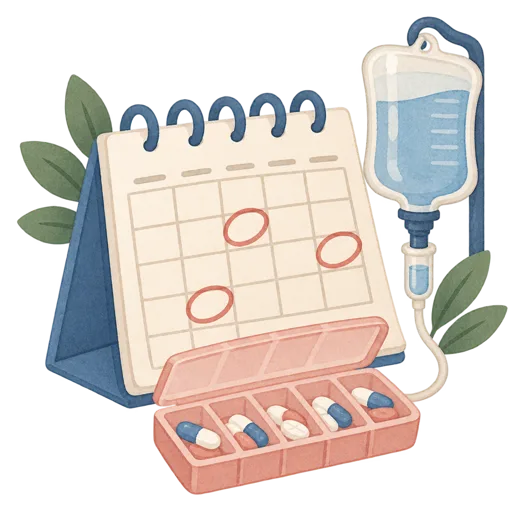
Carfilzomib is given in the clinic through a vein, often with IV fluids first. Lenalidomide is taken at home. Each cycle is 28 days. Treatment may be a set number of cycles before transplant or continue for many months. Your schedule may be different.
A typical cycle
- Days 1, 2, 8, 9, 15 and 16
- Clinic visits for carfilzomib through the IV (or days 1, 8 and 15 if given weekly). Dexamethasone on these weeks.
- Days 1 to 21
- Lenalidomide capsule once a day at home.
- Days 22 to 28
- Rest week with no lenalidomide or carfilzomib. Dexamethasone may still be given on day 22.
- Every cycle
- Blood tests to check counts, kidneys and myeloma proteins.
Common side effects and what helps
- Low blood counts, which raise the risk of infection, bleeding and tiredness. Wash your hands often and stay away from people who are sick.
- Tiredness. Short walks and rest can help.
- Diarrhea or constipation. Drink fluids and tell your team if it lasts.
- Shortness of breath or swelling in the legs. Tell your team, especially if new.
- High blood pressure. Your team will check it at each visit.
- Muscle cramps. Ask your team about fluids and checking your blood salts.
- Rash or itching. Use gentle soap and moisturizer.
- Trouble sleeping, mood changes and high blood sugar on dexamethasone days. Take it in the morning with food.
Call your care team right away if you have
- A fever of 100.4 degrees Fahrenheit (38 degrees Celsius) or higher, or chills
- Trouble breathing, chest pain, or a fast or pounding heartbeat
- Swelling, pain or warmth in one leg or arm, or sudden shortness of breath (signs of a blood clot)
- New confusion, a very bad headache, trouble speaking, or weakness on one side of the body
- Bleeding that will not stop, blood in your urine or stool, or many new bruises
- Much less urine than usual, or dark urine
Good to know
- Carfilzomib can affect the heart, blood pressure and kidneys. Your team checks your blood pressure and kidney tests, and may do a heart test.
- Lenalidomide can cause severe birth defects. You must follow a safety program: pregnancy tests and birth control for those who could become pregnant, and condoms for men. Do not donate blood or sperm.
- Lenalidomide raises the risk of blood clots. Most people take aspirin or another blood thinner.
- You may take an antiviral medicine to prevent shingles.
- IV fluids may be given before carfilzomib to protect the kidneys, especially in the first cycle.
At home
- Take lenalidomide at the same time each day. Swallow it whole and do not open the capsules.
- If you miss a lenalidomide dose by more than 12 hours, skip it and take the next dose at the usual time unless your team says otherwise.
- Take your blood thinner and antiviral medicine as prescribed.
- Drink plenty of fluids unless your team tells you to limit them.
- Check your blood pressure at home if your team asks you to.
Questions to ask
- Will I get carfilzomib once or twice a week?
- How many cycles will I get?
- Am I a candidate for a stem cell transplant?
- Which blood thinner should I take?
- How will we track whether the myeloma is responding?
Sources
Quick answers
- What is KRd (CRD)?
- KRd is a three medicine combination for multiple myeloma: an IV medicine (carfilzomib), daily pills (lenalidomide) and a steroid (dexamethasone). Carfilzomib, lenalidomide and dexamethasone.
- What does KRd (CRD) stand for?
- K = Kyprolis (carfilzomib); R = Revlimid (lenalidomide); d = dexamethasone.
- How is KRd (CRD) given?
- Carfilzomib is given in the clinic through a vein, often with IV fluids first. Lenalidomide is taken at home. Each cycle is 28 days. Treatment may be a set number of cycles before transplant or continue for many months. Your schedule may be different.
- What are the common side effects of KRd (CRD)?
- Low blood counts, which raise the risk of infection, bleeding and tiredness. Tiredness. Diarrhea or constipation. Shortness of breath or swelling in the legs. High blood pressure. Muscle cramps. Rash or itching. Trouble sleeping, mood changes and high blood sugar on dexamethasone days.
- When should I call my care team during KRd (CRD)?
- A fever of 100.4 degrees Fahrenheit (38 degrees Celsius) or higher, or chills; Trouble breathing, chest pain, or a fast or pounding heartbeat; Swelling, pain or warmth in one leg or arm, or sudden shortness of breath (signs of a blood clot); New confusion, a very bad headache, trouble speaking, or weakness on one side of the body; Bleeding that will not stop, blood in your urine or stool, or many new bruises; Much less urine than usual, or dark urine.
Last updated: 2026-10-27. Medically reviewed by Veli Bakalov, MD, medical oncologist (October 2026). General education from Step by Step, the patient portal of HemeOncBuddy.