
Kidney cancer: Full guide
What is kidney cancer?
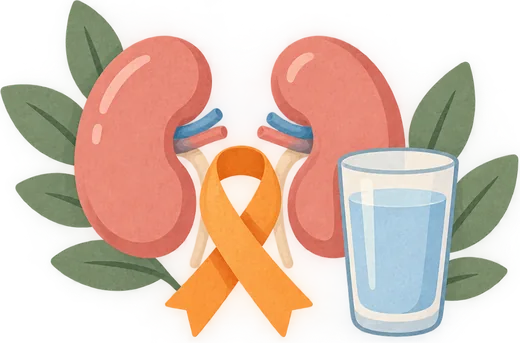
Your kidneys are two bean-shaped organs in your back, below the ribs. They clean your blood and make urine. Kidney cancer starts when cells in the kidney grow out of control and form a tumor (a lump).
The most common kind in adults is renal cell carcinoma (RCC). "Renal" means having to do with the kidney.
Today, many kidney cancers are found by chance. They show up on a scan done for another reason. Finding them early often means they are small and can be treated well.
Some people have blood in the urine, or pain in the side or back. Others notice a lump in the belly, tiredness, or weight loss. Many people have no symptoms at all.
Things that raise the risk include smoking, extra body weight, high blood pressure, and long-term kidney failure on dialysis. A small number of kidney cancers run in families.
Treatment has changed a lot in recent years. Your care team will explain what your type and stage mean for you.
Types
- Clear cell RCC
- The most common type, about 3 out of 4 kidney cancers. The cells look clear under a microscope. Most research and most new medicines focus on this type.
- Papillary RCC
- The second most common type. The cells grow in finger-like shapes. Some forms grow slowly, and others are more aggressive.
- Chromophobe RCC
- A less common type. It usually grows slowly and often has a good outlook.
- Collecting duct and renal medullary carcinoma
- Rare types that grow quickly. Renal medullary carcinoma mostly affects young people with sickle cell trait. These types are often treated with chemotherapy.
- Other rare types
- These include translocation RCC and tumors that do not fit a clear group (unclassified). Your team may send your sample to an expert for review.
- Sarcomatoid features
- Some tumors of any type have areas that look more aggressive under the microscope. These tumors can grow faster, but they often respond well to immunotherapy.
- Benign kidney tumors
- Not every kidney mass is cancer. An oncocytoma or an angiomyolipoma is usually not cancer. Your team may still watch it over time.
- Hereditary kidney cancer
- A few people are born with a gene change that raises their risk. Examples include von Hippel-Lindau (VHL) disease. Signs include cancer at a young age, tumors in both kidneys, or family members with kidney cancer.
Tests you may have
- CT scan
- A detailed X-ray that makes pictures of the inside of your body. A CT with contrast (a dye) is the main test to find and stage kidney cancer.
- MRI
- A scan that uses magnets instead of X-rays. It can help if your kidneys do not work well enough for CT dye. It can also check if the tumor has grown into large veins.
- Chest imaging
- A chest CT or X-ray checks if the cancer has spread to the lungs. The lungs are a common place for kidney cancer to spread.
- Biopsy
- A thin needle takes a small piece of the tumor to look at under a microscope. It is often used for small masses to help decide between watching and treating. It is not always needed if surgery is already planned.
- Blood and urine tests
- These check your kidney function, blood counts, calcium, and liver. Some kidney cancers change these levels. They also help plan treatment safely.
- Bone scan or brain MRI
- These are done if you have symptoms such as bone pain or headaches. They check if cancer has spread to the bones or brain.
- Genetic testing
- A blood or saliva test for inherited gene changes. It may be offered if you are young, have tumors in both kidneys, or have a family history.
- Pathology report
- After a biopsy or surgery, this report tells the type, grade, and size of the cancer. It helps decide if you need more treatment.
What the stage means
The stage tells how big the cancer is and how far it has spread. Kidney cancer uses stages 1 to 4.
For cancer that has spread, doctors also use a risk group (favorable, intermediate, or poor). This is based on your blood tests, how active you are, and how soon treatment was needed. It helps choose treatment.
- Stage 1
- The tumor is 7 cm (about 3 inches) or smaller and is only in the kidney. Surgery often cures it. Very small tumors may be watched closely instead.
- Stage 2
- The tumor is larger than 7 cm but still only in the kidney. Surgery to remove the kidney is common.
- Stage 3
- The cancer has grown into large veins or the fat around the kidney. Or it has spread to nearby lymph nodes. Surgery can still often remove it. Some people get immunotherapy after surgery.
- Stage 4
- The cancer has grown past the tissue layer around the kidney. Or it has spread to distant parts like the lungs, bones, liver, or brain. Treatment usually uses medicines that travel through the whole body. Some people live for years with good control.
- Risk group
- Favorable, intermediate, or poor risk describes how active the cancer may be once it has spread. It is not the same as the stage. Your team uses it to pick first treatment.
Tumor features and gene tests
Unlike some other cancers, most kidney cancers do not need a tumor gene test to choose treatment. The type of kidney cancer and the risk group matter most.
Inherited gene tests are important for some people. They can change how you are watched and treated, and they may matter for your family.
- VHL gene
- Changes in this gene drive most clear cell kidney cancers. People born with a VHL change have VHL disease. They can get many kidney tumors, plus tumors in the brain, spine, eyes, or pancreas.
- HIF-2 alpha
- A protein that builds up when the VHL gene does not work. A newer pill called belzutifan blocks it.
- Tumor grade
- How abnormal the cells look under a microscope. Higher grade tumors are more likely to come back. Grade helps decide if you need treatment after surgery.
- MET
- A gene that can drive some papillary kidney cancers. It is linked to an inherited syndrome called hereditary papillary renal carcinoma.
- FH and BAP1
- Inherited changes in these genes raise the risk of certain kidney cancers. FH-related kidney cancer can be aggressive and is treated in a special way.
- FLCN (Birt-Hogg-Dube)
- An inherited change linked to slow-growing kidney tumors, small skin bumps, and lung cysts.
- Sickle cell trait
- Not a gene test on the tumor, but important. Renal medullary carcinoma is found mostly in young people with sickle cell trait.
Main treatments
- Active surveillance
- Watching a small kidney mass with regular scans instead of treating right away. Many small masses grow slowly or are not cancer. Treatment starts if the mass grows or changes. It is often a good choice for older people or those with other health problems.
- Partial nephrectomy
- Surgery that removes only the tumor and a small rim of normal kidney. It saves as much kidney as possible. It is often preferred for small tumors.
- Radical nephrectomy
- Surgery that removes the whole kidney and the tissue around it. It is used for larger tumors. Most people live well with one kidney.
- Ablation
- Killing a small tumor with heat (radiofrequency) or cold (cryotherapy) through a needle. It may be an option for small tumors when surgery is not a good choice.
- Immunotherapy after surgery
- Some people have a higher chance of the cancer coming back. They may get the immunotherapy pembrolizumab for about a year after surgery. It lowers the chance of return and helps people live longer.
- Immunotherapy combinations
- For kidney cancer that has spread, a common first treatment is an immunotherapy medicine plus a targeted pill. Another option for some people is two immunotherapy medicines given together (ipilimumab and nivolumab).
- Targeted therapy (TKIs)
- Pills such as cabozantinib, axitinib, and lenvatinib. They block signals that help tumors grow blood vessels. They are used with immunotherapy or alone, often in later treatment.
- Belzutifan
- A pill that blocks HIF-2 alpha. It is used for kidney tumors in people with VHL disease. It often helps them avoid or delay surgery. It is also used for advanced clear cell kidney cancer after other treatments.
- Surgery or radiation for spread
- Sometimes the kidney or a few spots of spread are removed or treated with focused radiation. This depends on how much cancer there is and your health.
- Supportive (palliative) care
- Care focused on comfort, symptoms, and quality of life. It can be given at any stage, along with cancer treatment. Clinical trials, research studies of new treatments, are another option to ask about.
Common side effects and what helps
- Fatigue
- Feeling very tired is common with targeted pills and immunotherapy. Short walks can help. Rest when you need to, and ask others for help.
- High blood pressure
- Common with targeted pills. Check your blood pressure at home if your team asks. Blood pressure medicine often controls it.
- Diarrhea
- Can happen with targeted pills or immunotherapy. Drink plenty of fluids. Call if it is severe, bloody, or does not stop.
- Hand-foot skin reaction
- Redness, soreness, or blisters on the palms and soles. Use thick moisturizers, wear soft shoes, and avoid hot water. Tell your team early.
- Mouth sores
- Rinse often with a salt and baking soda rinse. Eat soft, bland foods. Your team can give mouthwash for pain.
- Immune side effects
- Immunotherapy can cause swelling in healthy organs like the bowels, lungs, liver, skin, or hormone glands. Thyroid problems are common. Tell your team about new rash, cough, diarrhea, or feeling unwell. Early treatment helps.
- Low blood counts (anemia)
- Belzutifan often lowers red blood cells, which can make you tired or short of breath. Your team will check your blood regularly.
- Low oxygen
- Belzutifan can lower oxygen levels. Call if you feel short of breath.
- Kidney function changes
- Losing part or all of a kidney can lower kidney function. Stay hydrated, control blood pressure, and ask before taking pain relievers like ibuprofen.
- Low appetite and taste changes
- Eat small, frequent meals with protein. A dietitian can help.
Living with and after kidney cancer
After surgery, you will have regular checkups and scans. These look for any return of cancer and check how your kidneys work.
Protect your remaining kidney function. Keep blood pressure and blood sugar in control. Ask your team before taking new medicines or supplements.
If you smoke, quitting helps your health and lowers the risk of other cancers. Ask your team for help. Staying active and at a healthy weight also helps.
Many people with advanced kidney cancer now live with it for years. Treatment may continue for a long time, like managing a long-term illness. Some people get breaks from treatment.
If you have an inherited kidney cancer syndrome, your family members may benefit from genetic counseling and testing.
It is normal to feel worried or down. Support groups, counselors, and social workers can help you and your family.
Call your care team right away if you have
- Fever of 100.4 F (38 C) or higher, or chills
- Blood in the urine that is new or heavy, or passing clots
- Severe pain in your side, back, or belly
- New or worse shortness of breath, or chest pain
- Very high blood pressure, or a bad headache, blurry vision, or confusion
- Severe diarrhea, or diarrhea with belly pain or blood
- New rash, yellow skin or eyes, or dark urine while on immunotherapy
- Much less urine than normal, or swelling in your legs
- Swelling or pain in one leg
- Sudden new back pain, or numbness or weakness in the legs
- Very strong thirst, confusion, or feeling very sleepy
- Not able to eat or drink, or keep fluids down, for a day
Sources
- NCI PDQ: Renal Cell Cancer Treatment (Patient Version)
- American Cancer Society: Kidney Cancer
- NCCN Guidelines for Patients
Last updated: 2026-10-27. Medically reviewed by Veli Bakalov, MD, medical oncologist (October 2026). General education from Step by Step, the patient portal of HemeOncBuddy.