Kidney cancer
Many kidney cancers are found early and cured with surgery. Newer medicines help people with advanced kidney cancer live longer.
Hi, I'm Rosa. Today we'll go through kidney cancer together, one step at a time. I'll keep it simple, and you can pause me, go back, or skip ahead whenever you like. Just so you know, this is for learning only. It is not medical advice, so please check everything with your own doctor and care team. Okay, let's get started.
What kidney cancer is
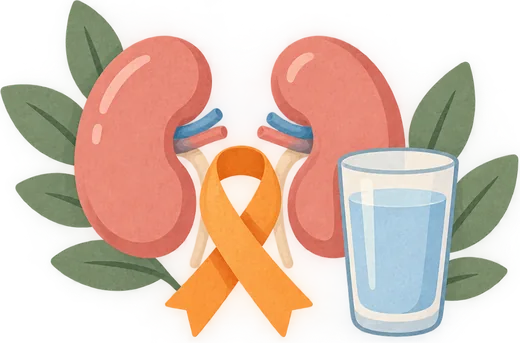
Let's start with the basics. Your kidneys are two bean shaped organs in your back. They clean your blood and make urine. Kidney cancer starts when kidney cells grow out of control. These cells form a lump, called a tumor. Today, many kidney cancers are found by chance. They show up on a scan done for another reason. Finding them early often means they are small. Some people have blood in the urine or pain in the side. Many people have no symptoms at all.
The main types
Now let's talk briefly about the types. Most kidney cancers in adults are renal cell carcinoma. Renal simply means having to do with the kidney. Clear cell is the most common kind. The cells look clear under a microscope. Papillary is the second most common kind. Its cells grow in finger like shapes. Chromophobe is less common and usually grows slowly. There are also some rare types. Not every kidney mass is cancer. Your care team will tell you which type you have.
Tests you may have
Now let's talk about tests. A CT scan with dye is the main test. It finds the cancer and helps set the stage. An MRI scan uses magnets instead of x-rays. Chest pictures check if the cancer has spread to the lungs. A biopsy uses a thin needle to take a small piece. It is not always needed if surgery is planned. Blood and urine tests check how your kidneys work. A pathology report tells the type, grade, and size. You can read more about each test in the guide.
What the stage means
Next up, let's talk about stages. The stage tells how big the cancer is. It also tells if it has spread. Kidney cancer uses stages one to four. In stages one and two, the cancer is only in the kidney. Stage three has grown into large veins, fat, or nearby lymph nodes. Stage four has spread further. If the cancer has spread, doctors also use a risk group. It is not the same as the stage. Doctors use both to plan your treatment. Ask your care team to explain yours.
Tumor features and gene tests
Before we move to treatment, there are some things to know. For most kidney cancers, the type and risk group matter most. Most people do not need a tumor gene test to choose treatment. But some tests do matter. The tumor grade shows how abnormal the cells look. Some people are born with a gene change that raises their risk. These inherited changes can matter for your family too. Each test has a different role. Your doctor will tell you which ones you have and what they mean. You can read more in the guide. The Questions to ask page can help too.
Main treatments
Now let's talk about treatment. Some small masses are just watched with regular scans. Surgery can remove only the tumor, or the whole kidney. Most people live well with one kidney. Ablation kills a small tumor with heat or cold through a needle. Immunotherapy helps your immune system fight the cancer. Some people get it after surgery. For cancer that has spread, it is often given with a targeted pill. Comfort care can help at any stage. Clinical trials are research studies that may offer new options. Ask your care team if one is right for you.
Side effects and what helps
Let's talk about side effects. Feeling very tired is common. Short walks can help. Targeted pills can raise your blood pressure. Medicine often controls it. Diarrhea can happen, so drink plenty of fluids. Some pills make the palms and soles red and sore. Thick moisturizers and soft shoes help. Immunotherapy can cause swelling in healthy organs. Tell your team about a new rash, cough, or diarrhea. Early treatment helps. We have a whole side effects guide on this site.
Living well after treatment
Last, let's talk about living well. After surgery, you will have regular checkups and scans. Protect your kidneys. Keep your blood pressure and blood sugar in control. Ask before taking new medicines. If you smoke, quitting really helps. It is normal to feel worried or down. Support is there for you. Call your care team right away for a fever or chills. Call for new or heavy blood in your urine. Call for severe pain in your side, back, or belly. If it feels very bad, call 911. You can also visit our new Screening, prevention and survivorship section.
You did great today. Thank you for spending this time with me. Bring your questions to your next visit. Call your care team any time something worries you. You are not alone, and your team is here to help.
Call your care team right away if you have
- Fever of 100.4 F (38 C) or higher, or chills
- Blood in the urine that is new or heavy, or passing clots
- Severe pain in your side, back, or belly
- New or worse shortness of breath, or chest pain
- Very high blood pressure, or a bad headache, blurry vision, or confusion
- Severe diarrhea, or diarrhea with belly pain or blood
- New rash, yellow skin or eyes, or dark urine while on immunotherapy
- Much less urine than normal, or swelling in your legs
- Swelling or pain in one leg
- Sudden new back pain, or numbness or weakness in the legs
- Very strong thirst, confusion, or feeling very sleepy
- Not able to eat or drink, or keep fluids down, for a day
Side effects: what helps
- Fatigue (tiredness)
- Nausea and vomiting
- Diarrhea
- Constipation
- Mouth sores
- Appetite loss and weight loss
- Taste changes
- Hair loss
- Low white blood cells and infection risk
- Fever with low white blood cells (febrile neutropenia)
- Anemia (low red blood cells)
- Low platelets and bleeding
Sources
Quick answers
- What is kidney cancer?
- Your kidneys are two bean-shaped organs in your back, below the ribs. They clean your blood and make urine. Kidney cancer starts when cells in the kidney grow out of control and form a tumor (a lump). The most common kind in adults is renal cell carcinoma (RCC). "Renal" means having to do with the kidney.
- When should I call my care team?
- Fever of 100.4 F (38 C) or higher, or chills; Blood in the urine that is new or heavy, or passing clots; Severe pain in your side, back, or belly; New or worse shortness of breath, or chest pain; Very high blood pressure, or a bad headache, blurry vision, or confusion; Severe diarrhea, or diarrhea with belly pain or blood; New rash, yellow skin or eyes, or dark urine while on immunotherapy; Much less urine than normal, or swelling in your legs; Swelling or pain in one leg; Sudden new back pain, or numbness or weakness in the legs; Very strong thirst, confusion, or feeling very sleepy; Not able to eat or drink, or keep fluids down, for a day.
Last updated: 2026-10-27. Medically reviewed by Veli Bakalov, MD, medical oncologist (October 2026). General education from Step by Step, the patient portal of HemeOncBuddy.