
Sickle cell disease: Full guide
What is sickle cell disease?
Sickle cell disease is an inherited condition of the red blood cells. It is passed down from parents through genes. It is not cancer, and it is not contagious.
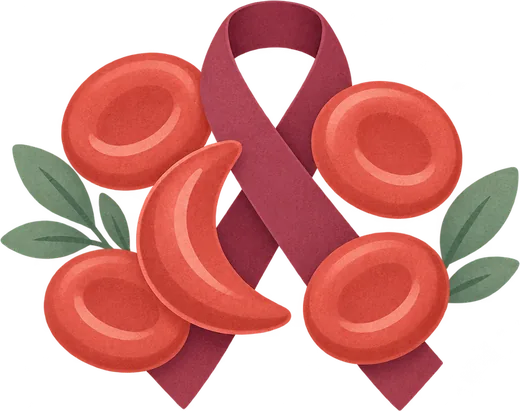
Red blood cells carry oxygen around the body using a protein called hemoglobin. Healthy red cells are round and bendy, so they slide easily through small blood vessels.
In sickle cell disease, the body makes a different form of hemoglobin called hemoglobin S. When oxygen is low, hemoglobin S sticks together in long strands. This bends the red cells into a stiff, curved shape like a crescent or sickle.
Sickled cells can get stuck in small blood vessels and block blood flow. This causes sudden pain and can damage organs over time. Sickled cells also break apart early. A healthy red cell lives about 120 days, but a sickle cell lives only 10 to 20 days. This leads to anemia (low red blood cells).
A person gets sickle cell disease by inheriting a sickle gene from one parent. The other parent passes on a sickle gene or another changed hemoglobin gene. In the US, all babies are tested at birth.
Sickle cell disease is most common in people whose families come from Africa, the Caribbean, the Middle East, or India. It also occurs in families from parts of Central and South America and the Mediterranean. Care has improved a great deal. Today there are more treatment choices than ever, including options that can cure some people.
Types
- HbSS (sickle cell anemia)
- Two sickle genes, one from each parent. This is the most common and usually the most severe type, with more pain crises, chest problems, and stroke risk.
- HbS beta-zero thalassemia
- One sickle gene and one beta thalassemia gene that makes no normal hemoglobin. It acts much like HbSS.
- HbSC
- One sickle gene and one hemoglobin C gene. It is usually milder, with fewer pain crises and higher blood counts. Eye problems and bone problems can be more common, and the spleen often stays large into adulthood.
- HbS beta-plus thalassemia
- One sickle gene and one beta thalassemia gene that still makes some normal hemoglobin. It is usually milder than HbSS.
- Rarer types
- Other combinations, such as HbSD, HbSE, HbSO, or sickle cell with high fetal hemoglobin, are less common. Some are mild and some are severe. Your care team will explain what your type means.
- Sickle cell trait (HbAS)
- One sickle gene and one normal gene. This is not a disease, and most people have no symptoms. Very hard exercise in heat, dehydration, or very high altitude can cause problems, so rest breaks and fluids matter. People with trait can pass the gene to their children.
Tests you may have
- Newborn screening
- Every baby in the US gets a heel-prick blood test at birth. It finds sickle cell disease early, so care and infection prevention can start in the first months of life.
- Hemoglobin test (electrophoresis or HPLC)
- A blood test that shows which types of hemoglobin you have and how much of each. It confirms the type of sickle cell disease or trait.
- Complete blood count and reticulocyte count
- A CBC measures hemoglobin and other blood cells. The reticulocyte count shows how many new red cells your marrow is making. Knowing your usual numbers helps your care team spot problems during illness.
- Transcranial Doppler (TCD) ultrasound
- A painless ultrasound of blood flow in the brain. Children with HbSS or HbS beta-zero thalassemia get it every year from about age 2 to 16. Fast blood flow means a higher stroke risk, and treatment can lower that risk a lot.
- Brain MRI
- Can find small silent strokes that cause no clear symptoms but can affect learning and memory. Experts suggest a one-time MRI in early school-age children and in adults.
- Eye exam
- A dilated eye exam checks for sickle cell damage to the retina. It usually starts around age 10 and is repeated every 1 to 2 years.
- Urine and kidney tests
- A yearly urine test checks for protein, an early sign of kidney damage. Blood tests check kidney function.
- Heart ultrasound (echocardiogram)
- Done if you have symptoms like shortness of breath or swelling. It can show signs of high pressure in the lungs (pulmonary hypertension).
- Iron tests
- If you get many transfusions, blood tests (ferritin) and sometimes a liver MRI check for too much iron in the body.
How serious it is
Sickle cell disease affects each person differently. Even people with the same type can have very different lives. Some have pain a few times a year. Others have pain most days.
Doctors think about severity in two ways: the type of sickle cell disease you have, and which problems have happened to you. Both help your care team decide whether you need stronger treatments like regular transfusions, a transplant, or gene therapy.
- More severe types
- HbSS and HbS beta-zero thalassemia usually cause more anemia, more pain crises, and more risk of stroke and chest problems.
- Milder types
- HbSC and HbS beta-plus thalassemia usually cause fewer crises and less anemia. Serious problems can still happen, so regular care is still important.
- Pain crises (vaso-occlusive crises)
- Episodes of sudden, severe pain when sickled cells block blood flow. Having frequent crises is a sign of more severe disease.
- Acute chest syndrome
- A serious lung problem with chest pain, fever, cough, or trouble breathing, and a new spot on the chest X-ray. It is a leading cause of hospital stays and early death in sickle cell disease. It often comes back.
- Stroke
- Sickle cell disease can narrow blood vessels in the brain. Stroke can happen in children and adults. A past stroke means you need ongoing treatment to prevent another one.
- Long-term organ effects
- Over time, sickle cell disease can affect the kidneys, eyes, lungs, heart, liver, and bones, such as hip damage called avascular necrosis. Regular screening helps find these early.
Lab tests to know
Knowing your usual lab numbers is very helpful. Your baseline is your normal level when you feel well. During an illness, comparing new results to your baseline helps doctors spot problems quickly.
Carry a note with your type of sickle cell disease, your usual hemoglobin, and your transfusion history. This is very helpful at a new hospital.
- Hemoglobin
- Measures how much oxygen-carrying protein is in your blood. A big drop below your usual level can signal a serious problem. Examples are the spleen trapping blood or a virus that pauses the marrow.
- Reticulocyte count
- Shows how many new red cells are being made. A very low count with a low hemoglobin can mean an infection called parvovirus has paused red cell production.
- Fetal hemoglobin (HbF)
- A form of hemoglobin babies make before birth. It blocks sickling. Higher levels usually mean milder disease. Hydroxyurea works by raising it.
- Hemoglobin S percent
- The share of your hemoglobin that is the sickle type. For people on regular transfusions to prevent stroke, the goal is usually to keep it below 30 percent.
- LDH and bilirubin
- Higher levels show more red cell breakdown (hemolysis). High bilirubin can cause yellow eyes and gallstones.
- MCV
- The size of your red cells. It often goes up on hydroxyurea, which can show the medicine is working and being taken regularly.
- Ferritin
- Measures stored iron. It is checked often in people who get many transfusions.
- Urine albumin
- Protein in the urine is an early sign of kidney damage. Finding it early allows treatment to protect the kidneys.
- TCD velocity
- The speed of blood flow in brain arteries on the TCD test. In children, a high result means high stroke risk and usually leads to regular transfusions.
Main treatments
- Pain crisis care
- Many pain crises can be managed at home with fluids, rest, warm packs, and pain medicines from your care team. In the emergency room, you should get strong pain medicine quickly, often within an hour. Using an incentive spirometer (a breathing device) every hour while awake helps prevent acute chest syndrome. Ask for a written pain plan.
- Hydroxyurea
- A daily pill that raises fetal hemoglobin and lowers sickling. It cuts pain crises about in half, lowers acute chest syndrome and transfusions, and helps people live longer. It is offered to everyone with HbSS or HbS beta-zero thalassemia starting at 9 months of age. Regular blood tests are needed.
- L-glutamine (Endari)
- A powder taken by mouth that may lower oxidative stress in red cells. It reduced pain crises in a clinical trial. It can be used with or instead of hydroxyurea, but it is less powerful.
- Crizanlizumab (Adakveo)
- A monthly IV medicine that makes blood cells less sticky. It is still FDA approved in the US. A later trial did not show fewer pain crises than placebo, so it is now used less often.
- Blood transfusions
- Simple transfusions add healthy red cells. Exchange transfusions remove sickle blood and replace it with donor blood. Transfusions treat stroke, severe acute chest syndrome, and severe anemia. Regular monthly transfusions prevent stroke in high-risk children and people with a past stroke. They are not needed for a routine pain crisis.
- Infection prevention
- The spleen stops working well in early childhood, so serious infections are a risk at any age. Young children take penicillin every day until about age 5. Everyone needs pneumococcal, meningococcal, Hib, yearly flu, and COVID-19 vaccines.
- Folic acid and daily care
- Folic acid, a B vitamin, helps the marrow make new red cells. Drinking plenty of fluids, avoiding very hot or cold temperatures, and not smoking help prevent crises.
- Gene therapy
- Two gene therapies were approved in late 2023 for people 12 and older with frequent crises. Exa-cel has since been approved for some younger children too. Exa-cel (Casgevy) uses a gene editing tool called CRISPR to turn fetal hemoglobin back on. Lovo-cel (Lyfgenia) adds a working hemoglobin gene. Your own stem cells are collected, changed in a lab, and returned after strong chemotherapy. The process takes months and is done at special centers.
- Stem cell transplant
- A transplant from a donor, most often a matched brother or sister, can cure sickle cell disease. It is usually considered for severe disease, such as stroke or frequent crises. Results are best with a matched sibling. Transplants using a half-matched family member are improving. Risks include graft-versus-host disease and infection.
- Note about voxelotor (Oxbryta)
- Voxelotor was taken off the market in 2024 because of safety concerns. If you still have it, do not take it. Talk with your care team about other options.
Treatment side effects and what helps
- Low blood counts from hydroxyurea
- Hydroxyurea can lower white cells and platelets. That is why you have regular blood tests, especially when the dose is changing. Your care team adjusts the dose to keep you safe.
- Other hydroxyurea effects
- Some people have nausea or darker skin and nails. Taking it at bedtime or with food may help nausea.
- Fertility and pregnancy
- Hydroxyurea can lower sperm counts, and this may not fully recover. Young men may want to talk about banking sperm. Hydroxyurea should be stopped before trying to become pregnant. Gene therapy and transplant chemotherapy can also cause infertility, so ask about fertility preservation first.
- Iron overload from transfusions
- Many transfusions add iron the body cannot remove. Too much iron can harm the liver and heart. Iron chelation medicines remove it. Your care team will check your iron levels regularly.
- Transfusion antibodies and reactions
- Over time, some people make antibodies against donor blood. This can make matching harder and cause delayed reactions. Closely matched blood helps. Tell any new hospital that you have sickle cell disease and about past transfusions.
- Pain medicine side effects
- Opioids can cause constipation, sleepiness, and itching. Drink fluids and use a stool softener. Take only as prescribed, and talk with your care team about a long-term plan for chronic pain.
- Gene therapy and transplant risks
- These require strong chemotherapy (busulfan), which can cause low blood counts, infection, mouth sores, and infertility. There is a risk of blood cancer later, and lovo-cel carries a boxed warning for this. You will need long-term follow-up.
- Infusion reactions
- IV medicines such as crizanlizumab can sometimes cause fever, chills, or pain during or after the infusion. Tell the nurse right away if you feel unwell.
Living with sickle cell disease
Many adults with sickle cell disease work, go to school, and raise families. Regular care with a sickle cell specialist or comprehensive center helps prevent problems and catch them early.
Daily habits help. Drink plenty of water. Dress warmly in cold weather and avoid getting overheated. Rest when you need to. Avoid smoking and limit alcohol. Get your vaccines and keep up with yearly eye and kidney checks.
Have a plan for pain crises. Know which medicines to take at home, when to call, and when to go to the emergency room. Carry a letter or care plan from your doctor with your type, usual hemoglobin, and the pain medicines that work for you.
Pregnancy is possible but needs careful planning and close care. Stop hydroxyurea before trying to conceive. Estrogen birth control is not recommended. Progestin-only pills, implants, and hormonal IUDs are safer choices. Partners may want testing to learn the chance of passing on the gene.
Living with chronic pain and frequent hospital visits can be hard. Depression and anxiety are common. Counseling, support groups, and school or work accommodations can help. You deserve to be believed and treated with respect when you seek care.
Caregivers and family play a big role. Groups such as the Sickle Cell Disease Association of America offer education, support, and local resources.
Call your care team right away if you have
- Fever of 101 F (38.3 C) or higher, or the temperature your care team told you to watch for
- Chest pain, cough, or trouble breathing
- Signs of stroke: weakness or numbness on one side, face drooping, trouble speaking, a bad headache, confusion, a seizure, or sudden vision loss
- An erection that lasts more than 2 hours and will not go away (priapism)
- Severe pain that is not controlled by your home pain plan
- Sudden belly swelling or pain on the left side, very pale skin, or feeling weak and dizzy (possible spleen trapping blood)
- Unusual tiredness, paleness, or shortness of breath, especially with a recent cold or rash
- Yellow eyes or skin that is much worse than usual, or very dark urine
- Sudden loss of vision or eye pain and swelling
- If it feels very bad, call 911.
Sources
- NHLBI: Sickle Cell Disease
- CDC: Sickle Cell Disease
- American Society of Hematology: Sickle Cell Disease
Last updated: 2026-10-27. Medically reviewed by Veli Bakalov, MD, medical oncologist (October 2026). General education from Step by Step, the patient portal of HemeOncBuddy.