
Sickle cell disease
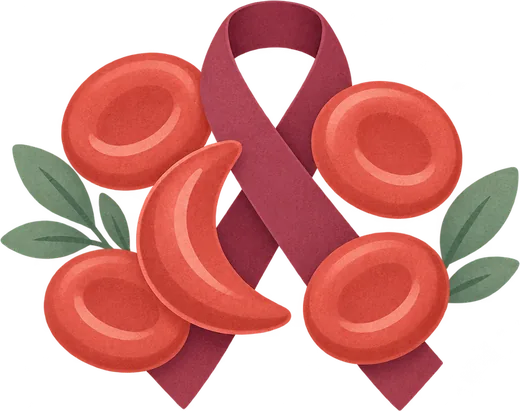
Sickle cell disease is an inherited blood condition that lasts a lifetime, but good daily care, newer medicines, and options like transplant and gene therapy help many people live longer, fuller lives.
Hi, I'm Rosa. Today we'll go through sickle cell disease together, one step at a time. I'll keep it simple, and you can pause me, go back, or skip ahead whenever you like. Just so you know, this is for learning only. It is not medical advice, so please check everything with your own doctor and care team. Okay, let's get started.
What sickle cell is
Let's start with what sickle cell disease is. It is an inherited condition of the red blood cells. It is passed down from parents through genes. It is not cancer, and you cannot catch it. Healthy red cells are round and bendy. In sickle cell disease, the cells can bend into a stiff, curved shape. These cells can get stuck in small blood vessels. That causes sudden pain. The cells also break apart early, which causes anemia. Care has improved a great deal.
The main types
Let's talk briefly about the types. The type depends on the genes you got from each parent. Sickle cell anemia means two sickle genes. It is the most common type and usually the most serious. One type mixes a sickle gene with a thalassemia gene. It can act much like sickle cell anemia. Another type mixes a sickle gene with a hemoglobin C gene. It is usually milder. There are rarer types too. Sickle cell trait means one sickle gene. It is not a disease.
Tests you may have
Now let's talk about tests. Every baby in this country gets a heel prick test at birth. A hemoglobin blood test shows which type you have. A blood count checks your red cells and other blood cells. Children get a painless ultrasound of brain blood flow. It checks stroke risk. A brain MRI can find small, silent strokes. Eye exams check the back of the eye. Urine tests look for early kidney changes. A heart ultrasound may be done if you are short of breath.
How serious it is
Next up, how serious it is. Sickle cell disease affects each person differently. Some people have pain a few times a year. Others have pain most days. Doctors look at two things. First, your type of sickle cell disease. Second, which problems have happened to you. These include pain crises, a serious lung problem, or stroke. This helps your team decide if you need stronger treatment. It helps everyone speak the same language. Ask your team what this means for you.
Lab tests to know
Before we move to treatment, there are some things to know. Your baseline is your usual lab level when you feel well. Knowing it helps doctors spot problems fast when you are sick. There are different lab tests, and each has a different role. One measures your hemoglobin. Another counts new red cells. Another shows a protective baby form of hemoglobin. Your doctor will tell you which ones matter and what they mean. Carry a note with your type and usual hemoglobin. You can read more in the guide.
Main treatments
Now let's talk about treatment. Many pain crises can be handled at home. Fluids, rest, and pain medicine help. Ask for a written pain plan. Hydroxyurea is a daily pill that lowers sickling. It cuts down pain crises. Blood transfusions add healthy red cells. Vaccines and daily antibiotics for young children prevent serious infections. Gene therapy and a donor stem cell transplant can cure some people. Clinical trials are research studies that may offer new options. Ask your team about them.
Side effects and help
Let's look at side effects. Hydroxyurea can lower some blood counts. That is why you have regular blood tests. Some people get nausea. Taking it at bedtime or with food may help. Many transfusions can build up too much iron. Medicines can remove the extra iron. Pain medicines can cause constipation. Drink fluids and ask about a stool softener. Some treatments can affect having children later. Ask about this before you start. We have a whole side effects guide on this site.
Living well every day
Now let's talk about living well. Many adults with sickle cell disease work, study, and raise families. Drink plenty of water. Dress warmly in the cold and avoid overheating. Keep up with vaccines and yearly checks. Have a plan for pain crises. You deserve to be believed and treated with respect. Call right away for a fever. Call for chest pain or trouble breathing. Call for signs of stroke, like weakness on one side. If it feels very bad, call 911. Also visit our new Screening, prevention and survivorship section.
You did great today. Thank you for learning with me. Write down your questions and bring them to your next visit. You can call your care team any time. Many people live full lives with sickle cell disease. You are not alone.
Call your care team right away if you have
- Fever of 101 F (38.3 C) or higher, or the temperature your care team told you to watch for
- Chest pain, cough, or trouble breathing
- Signs of stroke: weakness or numbness on one side, face drooping, trouble speaking, a bad headache, confusion, a seizure, or sudden vision loss
- An erection that lasts more than 2 hours and will not go away (priapism)
- Severe pain that is not controlled by your home pain plan
- Sudden belly swelling or pain on the left side, very pale skin, or feeling weak and dizzy (possible spleen trapping blood)
- Unusual tiredness, paleness, or shortness of breath, especially with a recent cold or rash
- Yellow eyes or skin that is much worse than usual, or very dark urine
- Sudden loss of vision or eye pain and swelling
- If it feels very bad, call 911.
Side effects: what helps
- Fatigue (tiredness)
- Nausea and vomiting
- Diarrhea
- Constipation
- Mouth sores
- Appetite loss and weight loss
- Taste changes
- Hair loss
- Low white blood cells and infection risk
- Fever with low white blood cells (febrile neutropenia)
- Anemia (low red blood cells)
- Low platelets and bleeding
Sources
Quick answers
- What is sickle cell disease?
- Sickle cell disease is an inherited condition of the red blood cells. It is passed down from parents through genes. It is not cancer, and it is not contagious. Red blood cells carry oxygen around the body using a protein called hemoglobin. Healthy red cells are round and bendy, so they slide easily through small blood vessels.
- When should I call my care team?
- Fever of 101 F (38.3 C) or higher, or the temperature your care team told you to watch for; Chest pain, cough, or trouble breathing; Signs of stroke: weakness or numbness on one side, face drooping, trouble speaking, a bad headache, confusion, a seizure, or sudden vision loss; An erection that lasts more than 2 hours and will not go away (priapism); Severe pain that is not controlled by your home pain plan; Sudden belly swelling or pain on the left side, very pale skin, or feeling weak and dizzy (possible spleen trapping blood); Unusual tiredness, paleness, or shortness of breath, especially with a recent cold or rash; Yellow eyes or skin that is much worse than usual, or very dark urine; Sudden loss of vision or eye pain and swelling; If it feels very bad, call 911.
Last updated: 2026-10-27. Medically reviewed by Veli Bakalov, MD, medical oncologist (October 2026). General education from Step by Step, the patient portal of HemeOncBuddy.