
CAPOX
Say it: KAP-ox
Capecitabine and oxaliplatin
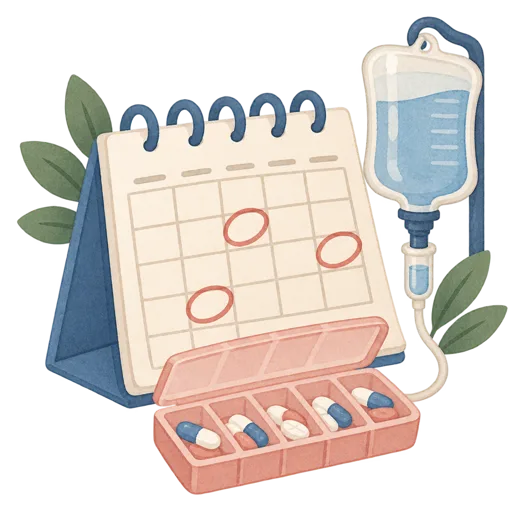
CAPOX is a two medicine chemotherapy plan that uses a chemotherapy pill at home plus an IV medicine in the clinic every 3 weeks.
Also called: XELOX, CAPEOX, XELOX plus bevacizumab, CAPOX plus bevacizumab, CAPOX with nivolumab, CAPOX plus nivolumab, Xeloda and oxaliplatin, capecitabine and oxaliplatin
What it is
Capecitabine is a pill that your body turns into fluorouracil (5-FU), the same medicine used in FOLFOX. Because you take it by mouth, you do not need a take-home pump. Oxaliplatin is a platinum medicine that damages cancer cells in a different way. After surgery, the goal is to lower the chance the cancer comes back. When cancer has spread, the goal is to shrink it, slow it down and help you live longer and feel better.
| CAP | capecitabine |
|---|---|
| OX | oxaliplatin |
Often used for
- Colon cancer after surgery, to lower the chance it comes back
- Rectal cancer, often along with radiation and surgery
- Colon or rectal cancer that has spread, often with bevacizumab
- Stomach and esophagus cancer, sometimes with an immunotherapy medicine such as nivolumab
- Stomach cancer after surgery, to lower the chance it comes back
- CAPOX after surgery for colon cancer (adjuvant)
- For many lower risk stage 3 colon cancers, 3 months (4 cycles) works about as well as 6 months and causes much less nerve damage. For higher risk cancers, 6 months (8 cycles) is often used. Your team will explain which is right for you.
- CAPOX plus bevacizumab
- Used for colon or rectal cancer that has spread. Bevacizumab is added on day 1 to help starve the tumor of blood supply. It can raise blood pressure and slow wound healing, so your team will plan carefully around any surgery.
- CAPOX plus nivolumab
- Used as a first treatment for stomach, gastroesophageal junction (where the esophagus meets the stomach) or esophagus adenocarcinoma that has spread or cannot be removed by surgery. It works best when tumor testing shows a high PD-L1 level. Other immunotherapy medicines, such as pembrolizumab or tislelizumab, are sometimes used instead. For HER2 positive stomach cancer, a HER2 medicine may be added.
- CAPOX for rectal cancer
- Often given before surgery, along with radiation, as part of a plan called total neoadjuvant therapy. The order of chemotherapy, radiation and surgery depends on your cancer.
The medicines in this plan
- Capecitabine (Xeloda)
- Chemotherapy pills that your body changes into fluorouracil. Taken by mouth twice a day, about 12 hours apart, on days 1 to 14, then 7 days off. Take within 30 minutes after a meal, with water.
- Oxaliplatin
- Platinum chemotherapy. Given through a vein over about 2 hours on day 1. It is the medicine that causes cold sensitivity and tingling.
- Bevacizumab
- Only in the bevacizumab version. An antibody that cuts off the blood supply that tumors need to grow. Given through a vein on day 1.
- Nivolumab
- Only in the nivolumab version for stomach or esophagus cancer. An immunotherapy medicine that helps your immune system find and attack cancer cells. Given through a vein on day 1.
How you get it
CAPOX is given partly in an outpatient infusion clinic and partly at home. On day 1, you get oxaliplatin through a vein, often through a port (a small device placed under the skin of the chest). This visit usually takes about 3 to 4 hours. You take capecitabine pills at home twice a day for 14 days, then have 7 days off. Each cycle is 21 days. After colon cancer surgery, most people get 4 cycles (3 months) or 8 cycles (6 months). For cancer that has spread, it continues as long as it is helping and you are handling it well, sometimes with oxaliplatin stopped after a few months while the pills (and any antibody) continue. Your schedule may be different.
A typical cycle
- Day 1
- Blood tests and a check in with your team. Then anti-nausea medicines and oxaliplatin through a vein over about 2 hours. Any add-on antibody is also given. You take your first capecitabine dose with your evening meal.
- Days 1 to 14
- Take capecitabine pills by mouth twice a day, within 30 minutes after breakfast and dinner. You may feel tired or queasy and sensitive to cold for several days after oxaliplatin.
- Days 15 to 21
- No pills. Rest and recovery. Sore hands and feet or diarrhea may still show up, so keep watching for them.
- Day 22
- The next cycle starts with blood tests, a check in, and oxaliplatin.
Common side effects and what helps
- Tingling or numbness in fingers, toes or around the mouth, often set off by cold. Wear gloves to reach into the fridge and skip icy drinks for a few days after treatment.
- Hand-foot syndrome: red, sore, swollen or peeling palms and soles. Use thick lotion every day, avoid hot water and tight shoes, and tell your team early.
- Diarrhea. Drink plenty of fluids and use the diarrhea plan your team gave you.
- Tiredness. Short walks and rest breaks both help.
- Nausea. Take your anti-nausea medicines as prescribed, even before you feel sick.
- Mouth sores. Rinse often with a mild salt and baking soda rinse and use a soft toothbrush.
- Low blood counts, which raise the risk of infection and bruising. Wash hands often and stay away from people who are sick.
- With nivolumab: the immune system can sometimes attack healthy organs, causing rash, diarrhea, cough, or changes in thyroid or liver tests. Report new symptoms early.
- With bevacizumab: higher blood pressure and nosebleeds. Your blood pressure will be checked at each visit.
Call your care team right away if you have
- A fever of 100.4 degrees Fahrenheit (38 degrees Celsius) or higher, or chills
- Diarrhea 4 or more times a day above your normal, or diarrhea at night. Stop your capecitabine pills and call.
- Vomiting more than once in a day, or not able to keep fluids or pills down
- Hands or feet so red, painful, swollen or blistered that it is hard to walk or use your hands
- Mouth sores so painful you cannot eat or drink
- Chest pain, or trouble breathing or swallowing (rarely, oxaliplatin can cause a throat squeeze feeling, or an allergic reaction during the infusion)
- Bleeding that will not stop, black stools, vomiting blood, or unusual bruising
- Feeling dizzy when you stand, or passing very little urine
Good to know
- Some people have a gene change (DPD deficiency) that makes capecitabine much stronger and can cause life-threatening side effects. Ask about DPD testing before you start.
- If you have a bad side effect, your team may tell you to stop the pills until it gets better. Do not restart until they say so. Never double up to make up for a missed dose.
- Capecitabine can make blood thinners like warfarin much stronger, and it interacts with some seizure medicines. Tell your team about every medicine and supplement you take.
- Kidney function matters for capecitabine. Your team checks blood tests and may lower the dose if your kidneys are weaker.
- Nerve symptoms from oxaliplatin can build up over time. Tell your team about any trouble buttoning, writing or walking, so they can adjust the plan.
- Bevacizumab is usually paused for several weeks around surgery because it slows wound healing. Your team will time this.
At home
- Take capecitabine within 30 minutes after a meal, with a glass of water. Swallow the pills whole. Do not crush, chew or cut them unless your pharmacist says it is OK.
- Use a pill calendar or phone alarm to track morning and evening doses. Bring your pill bottle and calendar to each visit.
- Wash your hands after touching the pills. Caregivers should wear gloves or avoid touching them. Store them away from children and pets.
- Avoid cold drinks, cold food and cold air on your face for several days after each oxaliplatin treatment.
- Put thick, unscented lotion on your hands and feet every day. Wear soft, roomy shoes and avoid long walks, heavy gripping and hot water.
- Drink about 8 to 10 cups of fluid a day unless your team told you otherwise.
- Keep diarrhea medicine, anti-nausea medicine and a thermometer at home and know when to use them.
Questions to ask
- How many cycles will I get, and is 3 months or 6 months right for me?
- Should I be tested for DPD deficiency before starting?
- What should I do if I miss a dose or throw up after taking my pills?
- When should I stop my pills and call you?
- Will an antibody or immunotherapy be added, and why?
- Do any of my other medicines interact with capecitabine?
Sources
Quick answers
- What is CAPOX?
- CAPOX is a two medicine chemotherapy plan that uses a chemotherapy pill at home plus an IV medicine in the clinic every 3 weeks. Capecitabine and oxaliplatin.
- What does CAPOX stand for?
- CAP = capecitabine; OX = oxaliplatin.
- How is CAPOX given?
- CAPOX is given partly in an outpatient infusion clinic and partly at home. On day 1, you get oxaliplatin through a vein, often through a port (a small device placed under the skin of the chest). This visit usually takes about 3 to 4 hours. You take capecitabine pills at home twice a day for 14 days, then have 7 days off. Each cycle is 21 days. After colon cancer surgery, most people get 4 cycles (3 months) or 8 cycles (6 months). For cancer that has spread, it continues as long as it is helping and you are handling it well, sometimes with oxaliplatin stopped after a few months while the pills (and any antibody) continue. Your schedule may be different.
- What are the common side effects of CAPOX?
- Tingling or numbness in fingers, toes or around the mouth, often set off by cold. Hand-foot syndrome: red, sore, swollen or peeling palms and soles. Diarrhea. Tiredness. Nausea. Mouth sores. Low blood counts, which raise the risk of infection and bruising. With nivolumab: the immune system can sometimes attack healthy organs, causing rash, diarrhea, cough, or changes in thyroid or liver tests. With bevacizumab: higher blood pressure and nosebleeds.
- When should I call my care team during CAPOX?
- A fever of 100.4 degrees Fahrenheit (38 degrees Celsius) or higher, or chills; Diarrhea 4 or more times a day above your normal, or diarrhea at night. Stop your capecitabine pills and call; Vomiting more than once in a day, or not able to keep fluids or pills down; Hands or feet so red, painful, swollen or blistered that it is hard to walk or use your hands; Mouth sores so painful you cannot eat or drink; Chest pain, or trouble breathing or swallowing (rarely, oxaliplatin can cause a throat squeeze feeling, or an allergic reaction during the infusion); Bleeding that will not stop, black stools, vomiting blood, or unusual bruising; Feeling dizzy when you stand, or passing very little urine.
Last updated: 2026-10-27. Medically reviewed by Veli Bakalov, MD, medical oncologist (October 2026). General education from Step by Step, the patient portal of HemeOncBuddy.